
Engineering education,
grounded in flight.
The School of Aerospace Engineering of KIIT-DU, Bhubaneswar brings together teaching faculty from reputed academic institutes and industry, dedicated laboratories and computational research facilities, preparing engineers for aviation, defence and space careers.
A learning environment built for flight, structures and systems.
The School of Aerospace Engineering of KIIT-DU, Bhubaneswar is operational with teaching faculty members from reputed academic institutes as well as from industry domain.
KIIT University's School of Aerospace Engineering consistently leads in student placements, global achievements, research projects and driving innovation through technology incubation and entrepreneurship. Its globally recognised programme attracts meritorious students from around the world.
The curriculum is designed to meet evolving industry requirements, offering students global exposure through foreign exchange programmes and internships, alongside flexible open electives, honours and minor courses for students interested in interdisciplinary study.
A clear purpose for aerospace engineering education.
The B.Tech programme's Educational Objectives (PEO) guide its teaching, professional practice and continued learning, as published on the School's Programme page.
The B.Tech programme in Aerospace Engineering aims to prepare students so that they shall get widely employed in aerospace or allied disciplines and adhere to professional ethics in engineering practice.
- 01
Graduates shall be able to provide solutions to aerospace engineering problems involving design, manufacturing, heat power, and operational management issues.
- 02
Graduates shall be able to perceive the limitation and impact of engineering solutions in social, legal, environmental, economic and multidisciplinary contexts.
- 03
Graduates shall demonstrate professional responsibility and strive to reinforce their knowledge as part of formal or informal education programmes.
Academic depth connected with practice and research.
These strengths are drawn directly from the School's official programme and about-us pages.
Industry and academia faculty
Teaching faculty members drawn from reputed academic institutes as well as the industry domain.
Dedicated laboratories
Aerodynamics, Propulsion, Aerostructures, Aircraft Systems and Avionics laboratories support hands-on learning.
Computational research capability
CFD and FEA software support aerodynamic, structural and vibro-acoustic analysis of aircraft components.
Global exposure
Internships, industrial training and one-semester courses at recognised Indian and foreign universities.
Flexible academic choices
Open electives, honours and minor courses for students interested in interdisciplinary study.
Industry visiting lectures
Regular visiting lectures by industry experts and industrial visits for faculty and students.
Undergraduate research exposure
Even undergraduate students get the opportunity to take part in high-end research beyond the curriculum.
Strong placement record
Since its inception, the School has a proven track record for placement, with a strong bent towards research and development — over 20% of students go on to higher studies (M.Tech / M.S / MBA / PhD) in India or abroad.
What KSAE graduates go on to do.
Join the technical workforce
Become successful professionals across a wide range of aerospace engineering and related domains.
Pursue advanced degrees
Continue into aerospace engineering, business or other professional fields through higher study.
Keep advancing
Continuously expand technical and professional skills through formal study and informal self-learning.
From classroom fundamentals to the aerospace industry.
The School's programme moves students from core concepts through laboratory practice, industry exposure and professional careers.
-
01
Understand
Build foundations in aerodynamics, propulsion, aerostructures, aircraft systems and avionics, taught by faculty from academia and industry.
-
02
Experiment
Apply concepts in dedicated laboratories using CFD, FEA and simulation software, working directly with aero-engines and aircraft components.
-
03
Connect
Gain exposure through industry visiting lectures, industrial visits, internships and one-semester study at foreign universities.
-
04
Progress
Move into aerospace and allied industries, or pursue higher studies — M.Tech, M.S, MBA or PhD — in India or abroad.
Programme, research and laboratories — one connected school.
Academic study, research and laboratory infrastructure are designed as parts of the same aerospace learning journey.
B.Tech and doctoral study in Aerospace Engineering
Explore the academic pathway, eligibility criteria and curriculum for the School's programme.
Explore programme → ResearchPublications and research activity
Discover published research from the School of Aerospace Engineering.
View publications → InfrastructureAerospace and computational laboratories
Aerodynamics, Propulsion, Aerostructures, Control Systems and Material Characterization labs.
View laboratories →Spaces built for aerospace research and practice.
The School's laboratories and computational facilities support experimental and analytical work across aerodynamics, propulsion, structures and control systems.
Computational facilities — CFD and FEA software for aerodynamic, structural and vibro-acoustic analysis.
Aerodynamics laboratory — equipped with subsonic wind tunnels and water tunnels.
Instrumentation & control systems lab — sensor technology, PID control and real-time data acquisition using NI LabVIEW / MATLAB.
Industry-supported exposure — visiting lectures and industrial visits for faculty and students.
Technical excellence, applied responsibly.
Selected from the B.Tech programme's official Program Outcomes (PO), published on the School's Programme page.
Ethics
Apply ethical principles and commit to professional responsibilities and norms of engineering practice.
Individual & Team
Function effectively as an individual, and as a member or leader, in diverse and multidisciplinary teams.
Environment & Sustainability
Understand the impact of engineering solutions in societal and environmental contexts, and the need for sustainable development.
Life-Long Learning
Recognise the need for, and engage in, independent and life-long learning amid technological change.
Academic leadership guiding the School.
Meet the Dean of the School of Aerospace Engineering, and explore the wider faculty team.

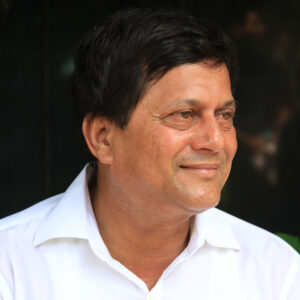
Dr. Mrutyunjay Jena
Dean, KIIT School of Aerospace Engineering
Meet the teaching team
View all faculty members of the School of Aerospace Engineering.
Find your pathway into aerospace engineering.
Explore the School's programme, laboratories, faculty and placement record at KIIT School of Aerospace Engineering.